Buying in Phoenix can get confusing fast when one home has a low monthly HOA fee, another has a long amenities list, and a third has no HOA at all. If you are comparing communities, it is easy to wonder what those dues really cover, how much the rules matter, and whether the tradeoff is worth it. This guide will help you understand how HOAs work in Phoenix, what amenities often come with them, and what to review before you make an offer. Let’s dive in.
How HOAs work in Phoenix
In Phoenix, you will usually see one of two setups: a planned community HOA or a condominium association. Arizona treats these as different types of associations, even though both collect dues and manage shared parts of a community.
A planned community is a mandatory-membership association created to manage, maintain, or improve property. A condominium association is separately organized and must exist by the time the first unit is conveyed. In both cases, the key documents usually include the declaration, bylaws, articles, and rules.
Why the HOA type matters
The type of association affects what you own, what the HOA maintains, and what your dues may support. That can make a big difference when you compare a condo to a single-family home in a planned community.
In Arizona condominiums, the association is responsible for maintenance, repair, and replacement of the common elements, while each owner is responsible for the unit unless the declaration says otherwise. That is one reason condo dues may be higher than dues in some single-family neighborhoods.
What HOA dues usually cover
Phoenix HOA dues vary a lot, so the monthly number alone does not tell the full story. What matters more is what you get in return through maintenance, amenities, and long-term planning.
A 2026 Phoenix market estimate from LotWize puts average dues at about $165 per month for single-family homes, $210 for townhomes, and $285 for condos. For broader context, Axios reported that 65% of Arizona home listings include HOA fees and that the statewide median monthly fee is $110.
Actual dues can range from under $50 per month to more than $2,000 per month in Phoenix, depending on the community. According to LotWize, common expenses include landscaping, pool maintenance, common-area insurance, and exterior pest control.
Common amenities in Phoenix communities
Amenities are one of the biggest reasons HOA fees differ from one neighborhood to another. In Phoenix, the package can be simple or more full-service depending on the property type and community design.
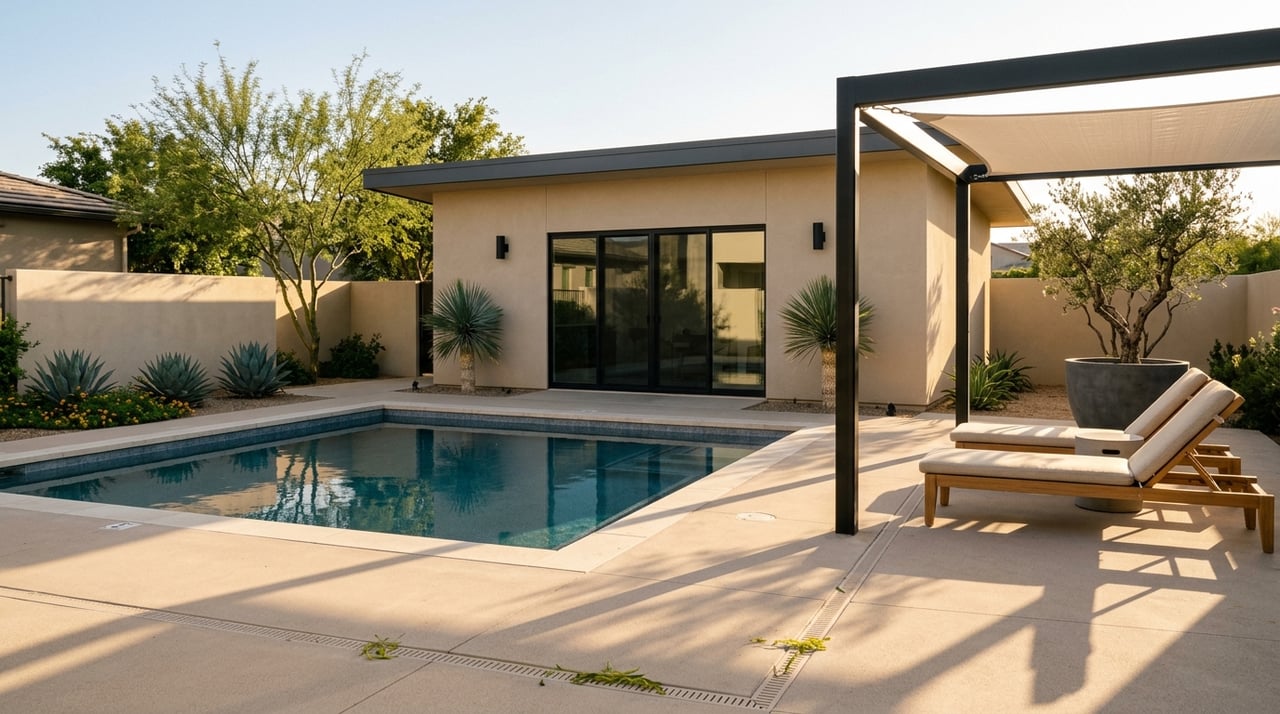
Common amenity categories include pools, landscaping, gyms, and gated entries. Some Phoenix communities advertise features like lap pools, fitness centers, clubhouse access, gated parking, sundeck seating, picnic areas, and BBQ space.
In general, more amenities usually mean a larger operating budget and a greater need for reserve funding. That helps explain why amenity-rich condos and attached communities often carry higher monthly dues than neighborhoods focused mainly on shared landscaping and basic common-area upkeep.
HOA rules and CC&Rs to review
Before you fall in love with a home, read the HOA rules carefully. In Arizona, the CC&Rs can affect how you use the property and what changes you can make.
The Arizona Department of Real Estate advises buyers to review the CC&Rs closely because they may restrict things like landscaping, RV parking, play equipment, satellite antennas, and other community features. These rules can matter just as much as the monthly fee if you have specific plans for the property.
If you are buying in a new subdivision, the Public Report is another important document. It covers items such as common community and recreation facilities, taxes and assessments, and property owners association details.
Rental rules in Phoenix HOAs
If you plan to rent out the property now or later, do not assume every HOA handles rentals the same way. Arizona law says an owner may rent the property unless the declaration prohibits it, and the owner must follow any lease-term limits in the governing documents.
The association may request only limited tenant information. It may not require rental applications or credit reports, and it may charge no more than $25 for the disclosure process for a new tenancy.
For buyers who want flexibility, this is a key part of due diligence. If future rental potential matters to you, review the declaration early so you know exactly what is allowed.
How fee increases and penalties work
Many buyers worry that HOA fees can change without warning. Arizona law does place some guardrails around assessments and penalties.
In a planned community, a regular assessment increase of more than 20% requires majority approval. Late-assessment charges are capped at the greater of $15 or 10%, and monetary penalties require notice and an opportunity to be heard.
There are also financial disclosure requirements. Condos must provide a budget summary within 30 days after adoption and an annual audit, review, or compilation within 180 days after the fiscal year ends. Planned communities must also provide an annual audit, review, or compilation within 180 days after year-end.
What buyers can review before closing
Arizona gives buyers access to more HOA information than many people realize. That is good news, because the documents often reveal whether a community feels well-managed and financially prepared.
For resale properties in both condos and planned communities, disclosure packets must include the current operating budget, the most recent annual financial report, the most recent reserve study if any, and summaries of pending litigation. Associations may charge up to $400 for the disclosure packet, plus limited rush and update fees.
Members can also inspect association records within 10 business days, although some records may be withheld for reasons such as attorney-client communications, pending litigation, or private personnel or member data. Board meetings are generally open to members and require advance notice and agendas.
Questions to ask before making an offer
When you compare Phoenix communities, it helps to ask the same set of questions each time. That keeps you focused on value, not just the lowest monthly fee.
Here are smart questions to ask:
- What does the monthly fee cover?
- Does it include landscaping, water, sewer, trash, insurance, roof or exterior maintenance, pool or gym access, gate service, or pest control?
- Is there a reserve study or long-range funding plan?
- Are reserves healthy enough to handle future repairs?
- Are any major repairs likely to lead to a special assessment?
- What are the rental, parking, and exterior-change rules?
- How are violations handled?
- How open is the board process?
- If the home is new construction, can you review the Public Report before signing?
How to weigh amenities against cost
The real question is usually not HOA versus no HOA. It is whether the monthly cost matches the maintenance support, amenities, transparency, and predictability you want.
For some buyers, a simple HOA with lower dues and fewer amenities is the right fit. For others, paying more each month makes sense if it reduces personal upkeep or gives you access to features you will actually use.
The best choice depends on your budget, lifestyle, and future plans for the property. If you compare the documents carefully, you can make a decision based on facts instead of guesswork.
If you want help comparing Phoenix communities, reviewing HOA tradeoffs, or narrowing down the right fit for your goals, Kelleigh Evans can help you move forward with clear, local guidance.
FAQs
What is the difference between a planned community and a condo HOA in Phoenix?
- A planned community HOA manages and maintains shared property in a mandatory-membership neighborhood, while a condominium association governs a condo project and typically maintains the common elements.
What do HOA fees usually cover in Phoenix communities?
- Phoenix HOA dues often pay for items like landscaping, pool maintenance, common-area insurance, and exterior pest control, but coverage varies by community.
How much are HOA fees in Phoenix?
- A 2026 Phoenix estimate cited average dues of about $165 per month for single-family homes, $210 for townhomes, and $285 for condos, with actual fees ranging from under $50 to more than $2,000 per month.
Can a Phoenix HOA restrict rentals?
- Yes, rental limits can apply if the declaration includes them, so you should review the governing documents carefully before buying.
What HOA documents should Phoenix buyers review before closing?
- Buyers should review the operating budget, annual financial report, reserve study if any, pending litigation summary, and the community’s CC&Rs and rules.
Can HOA fees increase in Arizona planned communities?
- Yes, but a regular assessment increase of more than 20% in a planned community requires majority approval under Arizona law.